Change of Life, Change of Settings: Apple Health Can Now Flag Perimenopause
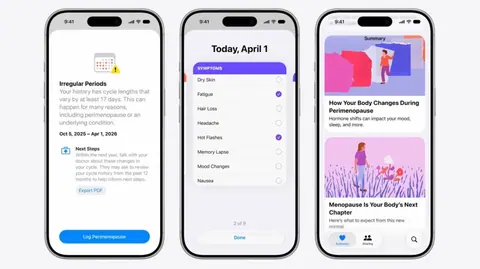
On June 8, 2026, Apple confirmed that its Health app will be able to tell users when they may be entering perimenopause, extending the platform's existing menopause features to the messy, often years-long transition that precedes it. The capability — reported by TechCrunch and CNET alongside Apple's broader WWDC 2026 software preview — uses cycle-tracking data logged on iPhone and Apple Watch to surface a perimenopause notification and prompt users toward relevant health information and conversations with clinicians.
Perimenopause has historically been a blind spot in both medicine and femtech. Symptoms — irregular cycles, sleep disruption, mood shifts, vaginal dryness, changes in libido — can begin in a person's late 30s or 40s and persist for years before menopause is clinically confirmed (defined as 12 consecutive months without a period). Because the phase is defined by variability rather than a clean endpoint, many people cycle through it without a name for what's happening. By analyzing logged cycle data for the irregularity patterns characteristic of the transition, Apple is positioning the Health app as a first-line signal that nudges users to seek care earlier.
The move plants one of the world's largest consumer-tech platforms squarely in territory that dedicated femtech companies have been building toward for years. Natural Cycles launched a dedicated perimenopause algorithm and its NC Band wearable in early 2026; startups like Clair Health ($11.6M raised in June 2026) are chasing continuous hormone sensing; and a wave of menopause-care brands have built businesses around the underserved midlife market. Apple's entry validates the category's size — but also raises the competitive stakes, since a free, pre-installed feature on hundreds of millions of devices reshapes consumer expectations about what basic cycle tracking should include.
It also reopens the privacy questions that have shadowed reproductive-health data since the Dobbs decision. Apple has historically leaned on on-device processing and encryption as a differentiator, and reproductive-health data is among the most sensitive a person can generate. How perimenopause inferences are stored, whether they sync to iCloud, and how they interact with law-enforcement requests will all matter to a user base that has grown wary of intimate health data living in the cloud.