Middlemen Now: CDC Lets ~100 Community HIV-Prevention Grants Lapse and Sends the Money Through States
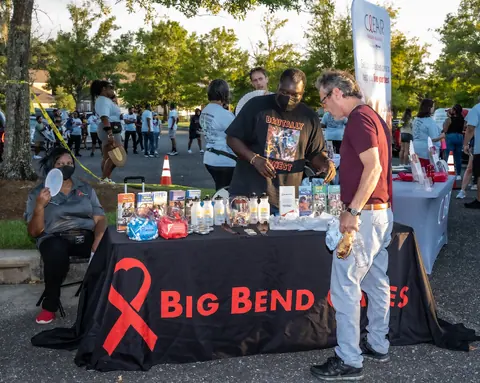
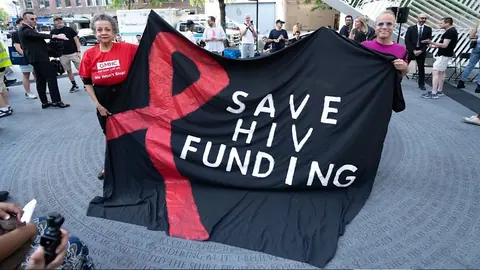
The week ending October 1, 2026, nearly 100 US community-based organizations (CBOs) lost their federal HIV-prevention grants, Stateline reported. The CDC's main five-year direct-to-CBO grant (PS21-2102) was not renewed. Instead, the administration is routing one-time supplemental money through state and local health departments under a separate mechanism (PS24-0047). Since 2021 the direct program has paid nearly $240 million to 96 community organizations in 31 states, D.C., Puerto Rico and the US Virgin Islands. The groups used it for HIV and STI testing, PrEP navigation and linkage to care. When asked why, HHS referred Stateline to the Office of Management and Budget, and neither OMB nor the White House responded.
The headline number is higher, but less of it is likely to reach the groups that did the work. The National Alliance of State and Territorial AIDS Directors (NASTAD) told Stateline that about $90 million will go to state health departments through May 2027, roughly double the ~$48 million a year the old CBO grant paid out. But health departments are only encouraged to pass money on: at least 25% in high-burden Ending the HIV Epidemic jurisdictions and 10% elsewhere, with no requirement. KFF estimated in August that CBOs would need about 35% of the new money just to stay level, and NASTAD puts it closer to 50%. Texas plans to pass along about 23% ($1.2 million of a $5.24 million award). Houston's Allies in Hope expects to lose $441,000 and at least three staff. PowerHouse Charlotte, which offered free HIV and STD screening aimed at gay Black men for 16 years, announced in August that it will close. KFF found that in Minnesota and Oregon, CBOs could not be made whole even if the states passed along 100% of their grants.
The change also causes timing and pricing problems. Health departments typically need 45 to 90 days to set up new contracts, so there is a funding gap that NASTAD's Emily Schreiber said could not be closed by the September 30 deadline. And because CBOs will no longer receive federal money directly, some will lose eligibility for 340B discounted drug pricing. That revenue stream has quietly paid for much of their PrEP and testing work. The direct-to-CBO approach dated to the late 1980s.
Sources
- Community groups lose HIV-prevention money as feds redirect dollars to states — Statelinestateline.org
- The Future of CDC HIV Prevention Funding for Community Organizations — KFF (Aug. 4, 2026)kff.org
- Community groups lose HIV-prevention money as feds redirect dollars to states — Times West Virginian (Stateline syndication)timeswv.com
Story updates 2
Newest first.
Texas lost the most, and the replacement money covers a fraction. On November 12, 2026, the Texas Tribune reported that the lapse of PS21-2102 has cut $29.2 million from Texas health organizations that test people for HIV in their own communities. Texas was the nation's largest beneficiary of the grant, which funded 11 community-based organizations over five years, mostly in urban areas. The replacement is a one-time $5.2 million CDC award to the Texas Department of State Health Services through May 2027. A DSHS spokesperson told the Tribune that $1.2 million, "almost a quarter," will flow to CBOs and the rest will support existing HIV-prevention and surveillance projects. Texas CBOs had been receiving more than $3 million a year directly from the CDC. The CDC did not respond to the Tribune's request for comment.
On the ground: Houston's Allies in Hope received about $441,000 a year, which covered more than a quarter of its roughly 2,000 annual tests. CEO William Jeffrey Campbell said testing will shrink unless new money is found. In Austin, Vivent Health lost about $1 million, roughly 30% of its funding, according to VP Emma Sinnott (CBS Austin). "There's a lot of stigma in the community, and they don't want people to know their sexuality," Sinnott told the Tribune, explaining why outreach testing at bars and clubs reaches people clinics don't. The Tribune cites CDC data showing CBOs found new HIV cases in 1.4% of CDC-funded tests from 2012–2017, versus 0.5% for health-department tests. Texas ranks fifth in new HIV diagnoses per capita (AIDSVu, 2024). State Rep. Venton Jones (D-Dallas), the Legislature's first openly HIV-positive member, said he will push for state replacement funding in the session starting January 2027 but called it "a huge hit." Jones is also behind this week's Texas sodomy-law repeal bill.
What changed: Our October entries showed how the money was being redirected nationally. Texas now shows what that means in dollars: about $1.2M in pass-through to CBOs in place of more than $3M a year in direct grants, in the state that relied on the program most. For at-home and retail STI-testing companies, the gap may push some testing toward mail-in kits and pharmacy channels. But the groups losing funding are the ones reaching people who avoid clinics, and a mail-in kit doesn't fully replace that.
New sources
The money arrived, and there was less of it. KFF updated its CBO-funding brief on October 21, 2026 with the actual awards. CDC released supplemental health-department funding on September 3: $91 million, which is 24% less than the ~$120 million described in the award announcement. Thirty health departments got what they expected. Fourteen saw cuts of 25% or more, six of them by more than 40%. Five eligible health departments got nothing: Alaska, Arkansas, Idaho, Tennessee and Wyoming. Arkansas and Tennessee both host CBOs that previously had direct PS21-2102 grants. KFF calculates that health departments would now need to pass on 46% of the supplemental money to bring CBOs back to their old funding levels, up from the ~35% it estimated in August. The required share varies widely by jurisdiction.
What it looks like on the ground. WUSF/Health News Florida reported on October 22 that Florida groups are losing part of the $46 million in redirected CBO grants. Florida has the third-highest rate of new HIV infections, after D.C. and Georgia. Tampa Bay's Empath Partners in Care (EPIC) faces a $445,000 loss. Its president, Joy Winheim, said EPIC's most recent grant year paid for 600 tests that found 10 previously undiagnosed infections, plus PrEP referrals and linkage to care. She is holding off on layoffs for now, but said "there's going to be a gap in funding" with no timeline for state pass-through. Other Florida CBOs losing direct CDC money include Metro Health Communities, Latinos Salud, Borinquen Health Care Center, Care Resource and Orange Blossom Family Health.
What changed: The October 3 story was about a structural shift. The new data show the shortfall in dollars. The supplement is a quarter smaller than promised, several Southern states got none of it, and the share states must pass through to make CBOs whole is now close to half. That increases the gap that commercial PrEP-telehealth and at-home-testing companies have offered to fill, especially in Arkansas and Tennessee, which now have neither a direct CBO grant nor a health-department supplement.