Feed Me Doubt: KFF Finds One in Ten Young Women Changed Birth Control After Social Media — as Australia Launches a Counter-Quiz
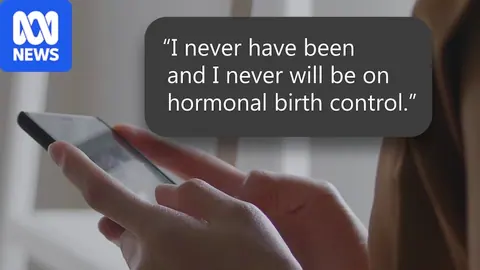
On September 24, 2026, KFF published findings from its 2026 Women's Health Survey on how women aged 18–49 handle contraception information. Six days later, on September 30, ABC News Australia reported that the federal government, with Healthdirect, has launched a "Contraception Options Finder" quiz to push back on contraception misinformation spreading on TikTok. The two reports come from different countries but describe the same problem.
The U.S. numbers (KFF). 86% of reproductive-age women trust healthcare providers "a great deal" or "a fair amount" for reliable health information, compared with 25% for AI tools and chatbots and 15% for social media and influencers. But 87% look for health information online through search, social media or AI. 35% saw something about contraception on social media in the past year, rising to 42% among women aged 18–25. Exposure to falsehoods is common: 53% have heard the false claim that hormonal contraceptives are harmful to your health, 43% that they limit future fertility, and 32% each that natural family planning is as effective as hormonal methods, or that emergency contraceptive pills such as Plan B cause abortions. Among women who saw contraception content on social media, 36% searched further, 19% talked to a clinician, 9% started or switched methods and 8% stopped hormonal birth control because of what they saw, with higher shares among 18–25-year-olds.
The Australian response (ABC). The ABC cites a 2025 La Trobe University study of 100 TikTok videos with nearly 5 billion combined views. Half came from "general uploaders," 15% from self-described hormone health coaches, another 15% from self-labelled health educators, and just 10% from medical professionals. Lead author Dr Caroline de Moel said "around half of the creators explicitly discouraged the use of hormonal contraception" and many promoted "natural" cycle-tracking methods without explaining their limits. Assistant Minister for Health and Women Rebecca White described the new Contraception Options Finder as an evidence-based quiz that shows which options are subsidised under the PBS. Healthdirect GP Dr Evonne Ong said people with bad experiences are more likely to post, while those with good experiences mostly stay quiet.
Sources
Story updates 1
What young people actually do the morning after. A study in The Journal of Sex Research, reported by Stateline on November 2, 2026, surveyed 1,259 US girls and women aged 15–29. Of the 633 who had had sex and weren't pregnant, about a quarter had used some post-coital method to prevent pregnancy. Only about 9% used evidence-based emergency contraception (Plan B or a copper IUD). About 16% used methods with no proven effect: prayer (9.4%), douching (6%), jumping up and down or exercising (3.3%), swallowing something (1.9%), punching their stomach or uterus (1.4%), medicine or vitamins (0.9%), inserting something vaginally (0.5%) or an enema (0.2%). About one in five of that group combined methods, most often prayer and douching. Unproven methods were more common among minors and non-white respondents.
Co-author Riley J. Steiner (University of Pittsburgh School of Medicine) said "we really don't want young people to be seen as misguided," and noted that lack of information, more than worry about hormones or difficulty getting care, was what drove people to post-coital methods. Stateline places the findings in a year of Title X and Teen Pregnancy Prevention Program cuts and a shift toward abstinence-only sex education in several states. It cites SIECUS's count of 15 states that teach abstinence-only sex ed.
What changed: KFF measured exposure to contraception myths. This study measures what people do as a result, and finds that prayer is used about as often as Plan B in this age group. The commercial gap is plain: emergency contraception is cheap, available over the counter, and still not reaching the people who need it most. That is a distribution and education problem for telehealth EC providers, pharmacies and sex-ed platforms, not a product problem.
New sources
- After sex, many girls and young women try to avoid pregnancy with unproven methods — Stateline via Yahoo News (Sofia Resnick, Nov 2, 2026)yahoo.com
- More young women try to avoid pregnancy with prayer, other unproven methods — Juneau Independent (Stateline republication, Nov 2, 2026)juneauindependent.com
- Young Americans Rely on Unproven Methods Over Plan B for Birth Control — Archynewsy (Nov 2, 2026)archynewsy.com