No Silver Bullet, Just a Shinier Gate: EFF Says Zero-Knowledge Proofs Won't Save Age Verification
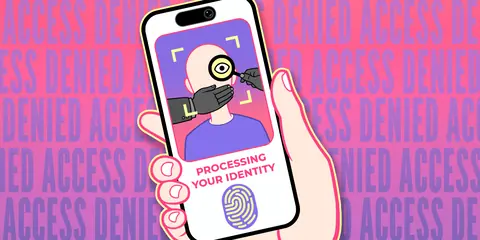
On August 18, 2026, the Electronic Frontier Foundation published an analysis by Daly Barnett arguing that zero-knowledge proofs — the cryptographic technique increasingly pitched as the privacy-preserving fix for internet age verification — are "gameable, hackable, and not the cure-all some may claim." The post lands as roughly half of US states now have some form of internet age verification law on the books, with the KIDS Act and the Kids Online Safety Act advancing federally, EU member states moving toward a centralized age-verification app by year's end, and Australia's broad restriction already in force.
The technical objection is not that ZKPs are bad math. EFF's post walks through how they work — Computer A commits to a piece of information, Computer B issues mathematical challenges that can only be answered correctly if the commitment is true, and the shortened non-interactive variant known as zk-SNARK verifies instantly, which is the flavor currently favored for age assurance. In the ideal case, a user proves adult status without disclosing anything else, and only one entity ever holds the underlying identity data.
The objection is architectural. Under the token model these schemes rely on, a user is issued a credential that vouches for their age every time they log in, "creating a constant link back to the entity that verified you." EFF's argument: the issuer can track every use of that credential, generating a metadata trail on any user it chooses to target, and can be pressured by an authoritarian government to revoke a person's credential — effectively removing their access to the internet. Without oversight of who is permitted to operate these systems, the approach "centralizes critical internet infrastructure in the hands of very few actors" and creates a single point of failure for internet access.
EFF also notes it flagged these concerns when ZKPs were first deployed in the age-verification context last year, and that more recent examples show the worries "weren't just conjecture." The group's broader position is unchanged: most age verification laws fail at their stated goal of keeping minors out while posing significant privacy risk to everyone. Separately, EFF wrote to the Senate Commerce Committee on August 5 opposing the SCREEN Act (S. 737), KOSA (S. 1748), the Youth AI Privacy Act and the CHATBOT Act — bills the committee voted to advance that day.