Patchy Supply: Estrogen Demand Nearly Triples and the FDA Still Won't Call It a Shortage
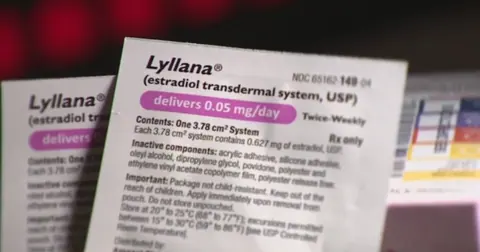
On September 3, 2026, the FDA posted an update acknowledging it is working with manufacturers to increase the supply of estradiol transdermal patches — while pointedly declining to use the word "shortage." CBS News reported the same day that doctors, patients and a group of Democratic House members are pressing the agency to formally add estradiol patches to its federal drug shortage database, arguing the current listing does not reflect what is actually happening at pharmacy counters. The gap between the agency's language and the pharmacy experience is now the story.
The demand curve is the cause. According to nationwide HealthVerity data cited by CBS, prescriptions for estrogen patches rose from roughly 594,000 in June 2024 to 1.6 million in May 2026 — close to a tripling in under two years. The trigger was regulatory: the FDA removed the 26-year-old "black box" warning from many menopausal hormone therapy products, with labeling changes taking effect in February 2026. Dr. Suzanne Hackenmiller, an Arizona OB-GYN quoted in the report, described the effect plainly: "More women felt safe to use estrogen. More doctors felt safe to prescribe it." Demand for progesterone, often co-prescribed, has grown alongside it, producing uneven supply across both.
The patient-side symptoms are the familiar ones of a shortage that has not been officially declared. Los Angeles patient Diane Harris told CBS she called "every pharmacy I could come up with," began stretching her twice-weekly patches to make supply last, and eventually found a pharmacy more than 25 miles away that could fill the prescription. Hackenmiller has started a petition urging a formal declaration, arguing it would give existing manufacturers an incentive to increase production and potentially draw new entrants. She also flagged a cost consequence: patients normally filling 90-day supplies are being handed 30-day supplies, paying the same copay multiple times for the same quarter of treatment.
The American Society of Health-System Pharmacists, which collects reports directly from pharmacists and providers, currently lists more than a dozen estradiol patch products on its active drug shortage list — a direct contradiction of the FDA database. In their letter to the agency, House lawmakers argued the methodology is the problem: "The FDA relies on historic demand data to determine if drug manufacturers are keeping pace, and these data may be lagging given how quickly demand for the patches has spiked."
The FDA's own framing is notably warm toward the underlying trend even as it resists the shortage label. In its update, the agency said it "views increased interest in menopause treatment as an important development for women's health and is working closely with manufacturers to help ensure that the supply of estradiol patches keeps pace with demand," while maintaining that although availability varies by pharmacy and location, the patches remain available. It recommends patients work with providers and pharmacists to find stock or alternatives.
Sources
- Estrogen patch shortage prompts doctors, lawmakers to seek FDA action as women struggle to find treatment — CBS Newscbsnews.com
- Surging demand for menopause patches prompts FDA action — FOX 5 New Yorkfox5ny.com
- FDA working with manufacturers to increase access to estradiol transdermal patches — Contemporary OB/GYNcontemporaryobgyn.net
Story updates 9
Newest first.
JAMA puts a number on the demand that's emptying pharmacy shelves. On November 19, 2026, Johns Hopkins researchers Dana Sarnak, Wen Shen and G. Caleb Alexander published "Trends in Menopause Hormone Therapy" in JAMA. Using US pharmacy dispensing data, they found monthly hormone-therapy dispensing for women aged 40-74 more than doubled since 2023, from about 2 million to 4.9 million. Per Science News, that is a jump from roughly 28 to 67 prescriptions per 1,000 women. The increase began in 2024, continued through 2025 on both sides of the FDA's November 2025 removal of the boxed warning, and carried on into 2026.
The growth is concentrated in the products that are scarcest. Use of transdermal and vaginal estrogen and progesterone rose, while oral formulations stayed flat. Science News notes the patch shortage this year, which the FDA attributes to rising demand. The study wasn't designed to explain the cause. Sarnak told Science News that "greater attention to women's health, updated medical guidance supporting individualized menopause hormone therapy and social media may all be contributing," and that clinician colleagues report more patients seeking menopause care.
A related Science News feature (Nov 20) on testosterone for women's libido cites an estimate that US female testosterone prescribing rose from 0.4 to 1.8 per 1,000 women between 2018 and 2026, all off-label, since the FDA has still not approved a female testosterone product. Demand for hormones in women is rising faster than either supply or regulators.
What changed: Until now, the case for demand outpacing supply rested on Symphony Health figures in trade reporting (about 4 million estradiol scripts a month, per Bloomberg on Nov 16). A peer-reviewed JAMA analysis now confirms a more-than-doubling, with growth led by patches. That makes the FDA's refusal to call it a shortage harder to defend just as Theramex offers emergency imports. It also gives menopause telehealth and patch makers solid market-sizing figures to cite.
New sources
- U.S. demand for menopause hormone therapy has more than doubled recently — Science News (Aimee Cunningham, Nov 19, 2026)sciencenews.org
- Sarnak, Shen & Alexander, "Trends in Menopause Hormone Therapy," JAMA (published Nov 19, 2026; DOI record)doi.org
- The libido drug women want is testosterone — Science News (Jamie Ducharme, Nov 20, 2026)sciencenews.org
A UK maker offers to fill the gap, if the FDA will let it. On November 16, 2026, Bloomberg reported (via Quartz, Finwire and Briefs) that London-based Theramex is in talks with the FDA to supply its Evorel estrogen patches to the US. CEO Robert Stewart: "We've been in dialogue with the FDA. They have the information that they would need to be able to issue a special import, and if they do, we'd be able to immediately respond." Theramex has expanded manufacturing in anticipation. Stewart says monthly US shipments would be "substantial" without hurting other markets, and that the talks, which began in the summer, have become more specific and senior over the past month. Theramex has no FDA-approved products. It plans to file for US approval in the first half of 2027 and is in early talks with an unnamed US distribution partner. Stewart previously ran Amneal, one of the top three US patch sellers alongside Viatris and Sandoz.
The FDA's position hasn't moved. A spokesperson said the agency still does not classify estrogen patches as being in nationwide shortage, based on company supply and demand data. Temporary importation is one of its tools, but it is rarely used without a declared shortage. ASHP has listed the patches as in shortage since January. Bloomberg, citing Symphony Health, puts estradiol-containing prescriptions at about 4 million a month, double the level of two years ago, with the growth accelerating after the FDA softened its boxed warnings.
What changed: This is the first named foreign manufacturer offering emergency supply, which puts the FDA's refusal to use the word "shortage" to a practical test. Temporary importation would effectively require the agency to admit there is a shortage. If it declines, US patients wait for a 2027 approval filing while Canada (Tier 3), Australia (imports and pharmacist substitution) and now Pfizer's Premarin exit from Canada show other regulators acting faster. For menopause telehealth companies competing on insured access, a new patch supplier matters more than another new provider.
New sources
- U.K. drugmaker is in talks with the FDA to supply estrogen patches to the U.S. — Quartz (Nov 16, 2026, citing Bloomberg)qz.com
- Theramex in talks with FDA to supply estrogen patches amid shortage — Finwire / Bloomberg (Nov 16, 2026)finwire.io
- Theramex lines up potential US supply of estrogen patches as demand outpaces supply — Briefs Finance (Nov 16, 2026)briefs.co
Pfizer pulls Premarin from Canada, starting with the vaginal cream. On November 12, 2026, Pfizer Canada told Reuters that after an internal review it will stop marketing Premarin vaginal cream and all three strengths of Premarin oral tablets (0.3 mg, 0.625 mg and 1.25 mg) in Canada. CBC confirmed the cream "is currently unavailable and will not be returning." Benefits and Pensions Monitor reports that no further batches of the cream will be supplied. Pfizer said existing tablet stock should last until about mid-2027, "although stocks could run out sooner if demand increases." The company said the decision "was not related to any new safety, efficacy or quality concerns" and that other treatments are available in Canada. Premarin Intravenous, used in hospitals, is not affected.
The cream had been in shortage in Canada since June. Health Canada's shortage database lists an active shortage of Premarin vaginal cream 0.625 mg (30 g tube) filed by Pfizer Canada on June 22, and BPM notes the product has had repeated shortage reports since 2017. This isn't the first market Pfizer has pulled back from: it suspended Premarin vaginal cream sales in India in July, citing "certain supply challenges." Pfizer said the Canadian decision applies only to Canada and declined to discuss other markets. Premarin cream and tablets are also sold in the U.S., New Zealand, Australia and Singapore. CBC and Reuters both connect the exit to the demand surge that followed the FDA's removal of long-standing boxed warnings on hormone therapy, and to Health Canada's warning earlier this month that some Bayer and Sandoz estradiol patch strengths will face intermittent shortages until early 2027.
What changed: Until now, this shortage meant backorders and allocation. This is the first time a major branded estrogen product has been withdrawn from a market outright, and it is the vaginal formulation. Local estrogen is first-line treatment for the genitourinary symptoms of menopause, including dryness and painful sex, so Canadian patients on Premarin cream now have to switch to other local estrogen products, which adds pressure to a supply Health Canada has already rated a Tier 3 patch shortage. For the sexual-wellness side of the market, tighter prescription supply usually sends more women to over-the-counter vaginal moisturisers and menopause-specific lubricants, the category that brands such as GLORIAH are raising money to serve. Watch whether Pfizer's "Canada only" stance holds as the U.S. version of this shortage continues.
New sources
Canada and Australia call it a shortage, while the FDA says output has doubled. In a November 10 column, The People's Pharmacy quoted an FDA statement. It says the agency "is not aware of an imminent risk of a nationwide shortage," that it is working with all six manufacturers of FDA-approved estradiol patches, and that their capacity expansions have produced "an overall doubling of market output in the last 12 months." The FDA acknowledges "localized challenges" and tells patients to ask pharmacists about alternatives. ASHP still lists estradiol transdermal systems as an active shortage, with products from Amneal, Noven, Sandoz, Viatris and Zydus on backorder, on allocation or released intermittently, and some makers unable to give a resupply date.
Other regulators are less hesitant. On October 28, 2026, Health Canada designated estrogen transdermal patches a Tier 3 drug shortage, its category for shortages with the greatest potential health-system impact. Australia's TGA says the "ongoing shortage of HRT patches is global," expects several Estradot strengths to stay limited through December 31, 2026, and has allowed overseas imports and pharmacist substitution of brands or strengths without a new prescription. The UK's continuing HRT patch shortages are in our separate story.
Cost is now a problem for Medicare patients. A 24/7 Wall St. explainer (Nov 10) describes what happens when a woman on Medicare Part D cannot get her patch and her doctor switches her to a cream or gel her plan doesn't cover. She pays full retail, and that spending does not count toward the Part D out-of-pocket cap ($2,100 in 2026, $2,400 in 2027) unless the plan approves a formulary exception. Plans must decide exceptions within 72 hours, or 24 hours if expedited. Open enrollment for 2027 plans ends December 7.
What changed: The FDA's "doubling" figure is the first numerical statement of how much supply has grown, and it implies that demand has more than doubled. Canada's top-tier designation and Australia's description of a global shortage make the FDA's continued avoidance of the word "shortage" harder to sustain. For menopause telehealth companies now competing on insured access (see Maven's in-network launch), the bottleneck has moved from getting a prescription to getting it filled and covered.
New sources
Washington removes more warnings and floats OTC vaginal estrogen. On October 30, 2026, HHS announced that the FDA had approved updated labeling for three more estradiol transdermal patches from two applicants. The update removes cardiovascular-disease, breast-cancer and probable-dementia statements from the boxed warnings. It follows the February 12 changes to six menopausal hormone therapy (MHT) products. HHS tied the move to the October 19 women's-health executive order (our coverage), and says 29 drug companies have now submitted labeling proposals. HHS did not name the brands.
The supply side. NICHD deputy director Dorothy Fink said estrogen-patch output has doubled over the past year. FDA's Sarah Ibrahim told reporters the agency has expedited 10 manufacturing supplements this year, two of them in the past week (Reuters). The FDA again said it is "not aware of an imminent risk of a nationwide shortage" while working with all six patch makers. It is also relying on an interim policy that lists estradiol as a Category 1 bulk substance for 503B outsourcing-facility compounding. The biggest new item is that the agency says it is "exploring with sponsors the potential for over-the-counter availability of vaginal estrogen products." Any Rx-to-OTC switch would need a separate approval based on evidence that consumers can self-select and use the products safely.
The pushback. The Guardian reports the FDA again convened no advisory committee and, when asked for the evidence, said it could be provided later. "I have been concerned by the lack of transparency behind these decisions," said Yale's Reshma Ramachandran. UW Medicine's Susan Reed welcomed the change but told Contemporary OB/GYN that "the pendulum has swung from the far left to the far right." She said it is now clinicians' job to explain the risks for women over 60–65 and for those combining transdermal estrogen with oral progestogens.
What changed: This is the first federal statement that OTC vaginal estrogen is under consideration. Vaginal estrogen is the first-line treatment for genitourinary syndrome of menopause (dryness and painful sex). An OTC version would move it into the same aisle as lubricants and vaginal moisturizers, compete with them directly, and give sexual-wellness retailers a hormone product to stock. More label removals while patches remain hard to find will likely increase demand. The questions from the ARPA-H/Evernow conflict story about how these decisions are being made remain unanswered.
New sources
- FDA again bypasses advisers to remove black-box warnings from menopause treatments — The Guardian (Oct 30, 2026)theguardian.com
- FDA removes boxed warnings from 3 more menopausal hormone therapy products — Contemporary OB/GYN (Oct 30, 2026)contemporaryobgyn.net
- HHS Updates Labeling for Estradiol Patches to Advance Menopause Care — Lynnwood Times (HHS release, Oct 30, 2026)lynnwoodtimes.com
- US health department to remove broad black box warning from three estrogen patch products — Reuters via WTVB (Oct 30, 2026)wtvbam.com
The shortage is spreading to other forms of estrogen. Reuters reported on October 28, 2026 that shortages now extend beyond estradiol patches to some injectable and vaginal estrogen products. ASHP listed multiple estradiol injection products from Hikma, American Regent and Par Sterile Products as in shortage in early September, and lists vaginal estradiol creams from Viatris' Mylan unit, Padagis and Teva as on backorder or allocation. CVS Health said supply of certain estradiol injection strengths has worsened in recent weeks. Midi Health CMO Kathleen Jordan described a "domino effect" as patients who can't get patches move to gels and creams. ProPharma's Kevin Schipper said the pattern doesn't point to a broad raw-material shortfall.
Manufacturers are adding capacity. Viatris said it added a shift at its St. Albans, Vermont plant, moving it to around-the-clock production, and is adding equipment, a new production line and possible third-party partnerships to expand patch supply. Amneal said it is increasing production. Mark Cuban told Reuters that Cost Plus Drugs has kept estrogen supply with only "intermittent interruptions" by buying as much as it can, while demand on the platform has risen "fivefold to tenfold" for almost every product.
State-level data. KSL reported on October 26 that Utah's large public-employee plan PEHP has seen estradiol patch use rise 167% in two years. A KSL producer was told twice-weekly patches had been on backorder since May. Erin Fox of University of Utah Health told the station she considers it a shortage "when our pharmacies can't purchase a drug," even though the FDA hasn't formally declared one.
What changed: Until now this was a patch problem. Switching to other forms was the standard workaround, and it is now running out. For sexual-wellness brands, the vaginal estradiol cream backorders matter most. Local estrogen is first-line treatment for genitourinary syndrome of menopause (vaginal dryness and painful sex), so demand for OTC moisturizers, hyaluronic-acid products and lubricants may rise while prescriptions are hard to fill. FDA's answers to the Senate Aging Committee letter are still due November 16.
New sources
The first patient-side numbers: rationing. At The Menopause Society's 2026 Annual Meeting in San Diego (October 20–24), Midi Health presented a survey of its newsletter subscribers on estradiol patches. The abstract will be published in Menopause. Among patch users, 44% reported trouble filling their prescription in 2026, and 34% of those said their pharmacy was out of stock. To cope, 55% changed or used multiple pharmacies, 28% rationed their medication and 10% stopped hormone therapy entirely. 39% said symptoms returned or worsened, 25% lost sleep, 12% reported lower productivity at work, and 69% lacked confidence they'd be able to get patches over the next three months. "A supply problem quickly becomes a patient health problem," Midi CMO Dr. Kathleen Jordan said. NBC News reported on October 23 that the FDA still says there is no estrogen patch shortage, even as women struggle to fill prescriptions. That is the same disagreement between FDA and ASHP we flagged when this story began.
The caveats are significant. This is a self-selected sample from a telehealth company's newsletter, not a population survey, and Midi issued a corrected version of the release on October 23. It is still the first quantified evidence of treatment interruption, and it lands alongside the CDC's first national count of the menopause treatment gap the same week.
What changed: The shortage now has measurable clinical effects, including rationing, stopping treatment and symptoms coming back. Those are the outcomes the Senate letter (FDA answers due November 16) can point to. For telehealth prescribers it is also a retention problem: a patient who stops therapy because the pharmacy is empty may not return. Expect more switching to gels, sprays and oral estradiol. The BMJ route-of-administration data makes moving to oral pills a clinical trade-off, not just a logistics choice.
New sources
- Midi Health Survey Finds Women Rationing Hormone Therapy Amid Patch Shortage — Femtech Insider (Oct 22, 2026)femtechinsider.com
- The Menopause Society Features Midi Health Studies on Estrogen Patch Challenges and Symptom Research (corrected release) — PR Newswire via Yahoo Finance (Oct 22–23, 2026)finance.yahoo.com
- The FDA says there's no estrogen patch shortage. Women are struggling to fill prescriptions. — NBC News (Oct 23, 2026)nbcnews.com
The Senate asks for numbers, due November 16. In an October 20, 2026 letter released October 21–22, Sen. Kirsten Gillibrand (D-NY), ranking member of the Senate Special Committee on Aging, along with Sens. Tammy Duckworth (D-IL) and Adam Schiff (D-CA), asked Acting FDA Commissioner Kyle Diamantas for a detailed plan to fix estradiol patch supply. The questions are specific. They ask what conditions would lead FDA to formally list patches in its Drug Shortage Database. They ask for production figures comparing late 2025 with current capacity, a forecast for when supply will meet demand, and the number of manufacturing-expansion submissions since November 2025, with average review times. They also ask whether FDA is considering temporary imports and expedited inspections of overseas plants, and how many staff are assigned to estradiol supply. Written answers are due November 16. Citing ASHP, the senators said nearly 20 formulations have had supply disruptions over the past year. Fingerlakes1 notes that FDA's own September 3 update said supply of approved patches had nearly doubled year over year across six manufacturers.
USA Today's reporting adds demand data. Per HealthVerity, estradiol patch prescriptions rose from about 594,000 in June 2024 to 1.6 million in May 2026. Doctors expect demand to rise further now that ACOG's October guideline strongly recommends hormone therapy. Midi CMO Kathleen Jordan told the paper the bottleneck is manufacturing, not demand, and "it could take years to solve it." Physicians are advising patients to try mail-order pharmacies, estrogen gels or sprays, or oral estrogen where it's safe.
What changed: Congressional pressure has moved from the House caucus letter (September 29) to Senate oversight with a deadline. The one concrete supply-side development this month is FDA's approval of the first generic Climara Pro combination patch on October 19. That adds a manufacturer for one formulation but does not touch the estradiol-only patches most women are trying to fill.
New sources
- Gillibrand seeks FDA supply plan for estrogen patches, with answers due Nov. 16 — Fingerlakes1.com (Oct 22, 2026)fingerlakes1.com
- U.S. Senators Kirsten Gillibrand, Adam Schiff Press Trump's FDA On Plan To Mitigate Estrogen Patch Shortage — Sierra Sun Times (Oct 22, 2026)goldrushcam.com
- Women can't find this medication. The problem isn't going away — USA Today (Laura Trujillo, Oct 21, 2026)usatoday.com
Congress escalates. On September 29, 2026, the House Democratic Women's Caucus sent a letter with 44 members to Acting FDA Commissioner Kyle Diamantas and HHS Secretary Robert F. Kennedy Jr. calling for immediate action on the estradiol transdermal patch shortage. It was led by Reps. Debbie Dingell (MI-06), Val Hoyle (OR-04), Ayanna Pressley (MA-07) and Yvette D. Clarke (NY-09). According to the caucus, estrogen-patch prescriptions have risen 162% over the past two years, driven partly by removal of the black-box warning. Members say constituents cannot fill prescriptions and are given "no clear timeline on when their medication will be back in stock." The letter notes Dingell first raised the shortage with HHS and FDA in July and says there has been "no significant assistance by the FDA." It acknowledges that FDA says it is helping manufacturers raise production but says patients "continue to report significant, ongoing difficulty… with no clear end in sight." Reuters also reported the letter.
Why it compounds: The letter comes days after a BMJ Danish registry study found oral HRT, not transdermal, carries the added clot risk (see our September 29 story). The clinical evidence is pushing prescribers toward the formulation that is hardest to get. Menopause telehealth platforms that sell patches, including Hers' $134/month patch offer covered in our archive, have an operational problem that is now also a congressional oversight issue.