Off-Label, On the Record: The FDA Finally Holds a Hearing on Testosterone for Women
On September 17, 2026, the U.S. Food and Drug Administration convened a day-long hybrid public workshop on testosterone use in menopausal women — the agency's most direct engagement yet with a therapy that millions of American women already take and that the FDA has never approved for them. The meeting was run by the FDA's Office of Women's Health together with the Center for Drug Evaluation and Research, and Reuters reported that in the opening hours alone ten speakers, including government officials and clinicians, worked through testosterone levels in women, its potential uses against menopause symptoms, and its safety profile.
The central fact hanging over the room: there is no FDA-approved testosterone product for women in the United States, despite years of off-label prescribing for hypoactive sexual desire disorder (HSDD) — the one indication for which medical guidelines and efficacy evidence actually exist. The UK, Australia, New Zealand and South Africa have all approved or licensed female-specific testosterone products. Assistant Secretary for Health Admiral Brian Christine used his opening remarks to call that gap unacceptable, telling the agency to "listen to the women who need an approved testosterone product" and "get this done." Dorothy Fink, deputy director of the Eunice Kennedy Shriver National Institute of Child Health and Human Development, said women deserved testosterone options "formulated and dosed specifically for them."
Not everyone in the room wanted the conversation to move that fast. Rajita Patil, director of the UCLA Comprehensive Menopause Care Program, told the workshop that the evidence supports testosterone only for postmenopausal women with HSDD, with insufficient data to recommend it for mood, cognition or general well-being, and that oral testosterone is not recommended because of its effects on cholesterol. Testosterone has been reviewed by the FDA multiple times for use in women and never approved, largely over missing long-term safety data and unresolved questions about cardiovascular and breast cancer risk. The agency's pre-meeting comment docket drew hundreds of submissions, many from women describing improved libido, energy and quality of life. The public comment period closes October 19, 2026.
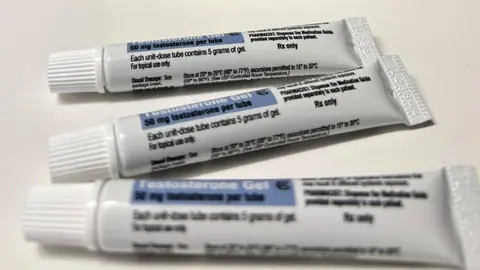
The demand side is not theoretical. In a separate Reuters investigation published the same morning, an exclusive data analysis by healthcare analytics firm Truveta found the rate of women receiving a testosterone prescription jumped 146% — nearly tripling — between January 2023 and July 2026. Because no female-dosed product exists, patients and prescribers improvise: splitting packaged male formulations such as AbbVie's AndroGel or Keenova Therapeutics' Testim, or going to compounding pharmacies. Dr. Stephanie Faubion, director of Mayo Clinic's Center for Women's Health and medical director of The Menopause Society, was blunt about the gap between the hype and the data: "What testosterone is being touted for in the lay public and on social media is not really what we have data for."
That improvisation is now colliding with the pharmacy counter. Women's health nurse practitioner Jennifer Lanoff told Reuters that Amazon Pharmacy rejected her practice's prescriptions for the first time this year, citing a new policy; Amazon said it does not dispense some testosterone prescriptions requiring women to customize doses, that the policy is not sex- or gender-specific, and that it refers those customers to compounding pharmacies. Compounded testosterone runs roughly $100 for a three-month supply versus about $30 after discounts for a ten-month supply commercially, per Lanoff. Magen Price, a nurse practitioner and founder of Mystic Valley Sexual Wellness, said more than a third of the 80 patients in her practice currently on testosterone have hit prescription problems, including at CVS and Walgreens. CVS said its pharmacies regularly fill topical testosterone gel prescriptions for women.
Sources
Story updates 5
Newest first.
New data: prescribing is rising fast, mostly outside the one evidence-based use, with little monitoring. A retrospective cohort study in The Journal of Clinical Endocrinology & Metabolism (led by Sarah C. J. Jorgensen, Marshfield Clinic Research Institute; DOI 10.1210/clinem/dgag444), summarized by Medscape on November 20, 2026, followed 10,185 US women who started testosterone between 2016 and 2024 in TriNetX health records, excluding gender-affirming care.
- Only 17% had a documented diagnosis of hypoactive sexual desire disorder (HSDD), the one indication with supporting evidence in postmenopausal women.
- New use rose 7.5% a year from 2016 to 2022, then 22% a year from 2022 to 2024.
- Testosterone levels were checked in only 16% at baseline and 10% at follow-up. Of those tested at follow-up, 38% were above 70 ng/dL, the upper limit for premenopausal women, and 3.6% were above 700 ng/dL.
- 59% got only one prescription. Among repeat users, median time on therapy was 19.3 months, and 37% were still on it at 24 months, past the point where good safety data exists.
The authors note the limits: health-record prescriptions don't show dispensing or dose, HSDD is probably under-coded, and testing outside the health system isn't captured. A Science News feature (Nov 20) and Medical Daily (Nov 22) add a Truveta estimate that female testosterone prescribing for all uses rose from 0.4 to 1.8 per 1,000 women between 2018 and 2026, all off-label, with no FDA-approved female product. Medical Daily reports more than 30 trials underway or planned and at least one company, Aviva Bio, developing a female formulation.
What changed: The September FDA workshop was about evidence gaps. This is the first large real-world look at how testosterone is actually being prescribed to women, and it shows the gap between practice and evidence: most new users have no recorded HSDD diagnosis, most aren't monitored, and more than a third of those tested are above the female range. Telehealth and menopause clinics selling testosterone for energy, mood or "brain fog" now face both the negative cognition meta-analysis noted in our November 2 update and evidence of loose monitoring, which supports a future FDA label limited to HSDD with lab-monitoring requirements.
New sources
- Testosterone Use in Women Rises, Monitoring Remains Low — Medscape (Nov 20, 2026)medscape.com
- The libido drug women want is testosterone — Science News (Nov 20, 2026)sciencenews.org
- More U.S. women are receiving testosterone, but no female-specific product has FDA approval — Medical Daily (Nov 22, 2026)medicaldaily.com
The brain-fog claim fails its first meta-analysis. On October 30, 2026, researchers at UCL's Menopause Mind Lab published a systematic review and meta-analysis in Reproduction and Fertility (Faulkner et al., DOI 10.1530/RAF-26-0080). It asks whether testosterone improves thinking and memory during and after menopause. The review covered five studies of women aged 41 to 65, with treatment lasting 4 to 26 weeks. The pooled analysis of three randomized controlled trials (244 women) found no statistically significant improvement in executive function, verbal memory or visuospatial memory compared with placebo.
The authors are careful about what that means. Corresponding author Dr Alexandra Faulkner said the result "reflects a lack of sufficient evidence rather than evidence of no effect." Senior author Prof. Aimee Spector noted that perimenopausal women, the group most likely to be prescribed testosterone for brain fog, are missing from the trials. She also said: "Social media is flooded with claims that testosterone improves memory and brain fog, and we hear of many women taking testosterone specifically to manage these symptoms." The paper notes that British Menopause Society and International Menopause Society guidance supports testosterone in women only for low libido, and that prescribing has anecdotally increased across NHS and private UK clinics.
What changed: Three weeks ago the debate was cardiovascular safety (the Drexel/TriNetX signal) versus platform-run surveys of benefit (Joi + Blokes, Hone). The independent evidence on one of the most heavily marketed off-label uses, cognition, now points to no proven benefit. That strengthens the case that any FDA-approved female testosterone will be limited to HSDD. Telehealth platforms marketing testosterone for "focus" and "clarity" in midlife women are making claims the best available trials don't support, which creates FTC and ASA exposure, not just a clinical debate.
New sources
The telehealth data arrives, and it isn't about libido. A week after the cardiovascular signal, the other side of the debate presented at The Menopause Society 2026 Annual Meeting in San Diego. Medscape reported on October 22, 2026 on a retrospective survey by Paul R. Reynolds, PhD, a cell biology professor at Brigham Young University. It covered 332 women aged 27–78 (mean 45.7) who received bloodwork-guided testosterone as routine care through telehealth platform Joi + Blokes, where Reynolds is a scientific advisor. Doses targeted a serum total testosterone of 25–50 ng/dL using topical, oral or subcutaneous routes. Women reported improvement in all eight domains measured. Energy/fatigue was highest at 84.3%, followed by depression (70.8%), irritability (69.0%), anhedonia (67.5%) and sexual interest (66.9%). Asked for their top benefit, women chose energy (64.2%) and mood (49.7%) more often than sexual desire (41.3%). Memory and concentration gains appeared around 4–6 months. Reynolds was clear about the limits: "retrospective, single-arm… no placebo group, so it shows association, not cause." The survey was not a validated instrument, and adverse events were not systematically captured.
A second platform dataset points the same way. Hone Health, a physician-led longevity platform, said in October that its September 2026 analysis of 1,220 peri- and postmenopausal women taking testosterone without estrogen or progesterone found improvement across 18 menopause symptoms, led by sexual desire, energy, strength and stamina.
What changed: This story is now a fight over evidence. Consensus guidance (2019 Global Position Statement, 2021 ISSWSH) supports testosterone in women only for HSDD. The FDA workshop panel agreed. The new real-world data, both from platforms that sell the therapy, says patients value it most for energy and mood, which are exactly the indications that aren't supported. Set against the Drexel/TriNetX signal (HR ~8 for cardiovascular events, covered October 16), the gap is clear: demand and marketing are moving toward "vitality," and safety and labeling are still tied to libido. Any female-specific product FDA eventually approves will probably be HSDD-only. Platforms selling testosterone for energy are relying on off-label prescribing and their own surveys, which are not independent evidence.
New sources
A cardiovascular safety signal arrives days before the comment docket closes. The Menopause Society has released results of a study to be presented at its 2026 Annual Meeting in San Diego (October 20–24). The study links testosterone therapy in postmenopausal women to a higher rate of incident cardiovascular disease. Researchers led by Dr. Xuezhi Daniel Jiang of Drexel University College of Medicine used the TriNetX electronic-health-records network. They propensity-matched more than 6,300 postmenopausal women aged 45+ with no prior cardiovascular disease and no testosterone use in the previous 12 months, then compared women who started testosterone with women who did not.
According to Medical Daily's summary of the release, the composite outcome of coronary artery disease, ischemic stroke and heart failure occurred in 3.8% of the testosterone group versus 0.5% of controls over an average follow-up of nearly three years. That is a hazard ratio of 8.08, with a wide confidence interval of roughly 4.7 to 13.8 because events were few. The association held across alternative group definitions and when comparing testosterone plus hormone therapy with hormone therapy alone. The caveats matter. It is a retrospective records study that can show association, not causation. The release does not describe doses, formulations or duration of use. Absolute event rates were low, and the release doesn't say whether the work is peer-reviewed. "Our findings identify a potentially important cardiovascular safety signal," Jiang said, adding that it "warrants further prospective investigation." The Society notes that testosterone has proven effective for hypoactive sexual desire disorder but not for symptoms such as fatigue, memory loss, weight gain or bone loss, and that there is no FDA-approved testosterone product for women.
What changed: This story has tracked rapidly rising demand (a 146% rise in prescriptions per Truveta; about 60% growth in 2025 alone per UCSD) alongside thin safety data. This is the first outcome-level cardiovascular signal to appear in the window before the FDA docket closes, and it reinforces the October 6 point that cardiovascular safety in midlife women is the open question. The public comment period on the FDA workshop docket closes October 19. Telehealth and menopause brands marketing testosterone for energy, mood or "longevity" rather than HSDD now face a sharper liability profile.
New sources
- Testosterone Therapy May Increase Risk of Cardiovascular Disease in Postmenopausal Women — The Menopause Societymenopause.org
- Postmenopausal Women Who Started Testosterone Had Eightfold Higher Rate of Cardiovascular Events, Though Absolute Risk Stayed Low — Medical Daily (Oct 15, 2026)medicaldaily.com
A second dataset confirms the demand surge, and adds a cardiology warning. On October 5, 2026, UC San Diego publicised research by Ido Avivi, Cynthia Stuenkel (a founding member and past president of The Menopause Society), Revathy Sampath-Kumar and Ori Ben-Yehuda, published in JACC: Advances as "Accelerating Testosterone Prescribing for U.S. Women." Using a dataset of more than 300 million patient records, the team found US testosterone prescribing to women held steady at 46–50 per 100,000 from 2016 to 2021, then rose to 130.8 per 100,000 in 2025, with prescriptions up nearly 60% in 2025 alone. Women aged 45–64 accounted for more than 60% of prescriptions. The most common recorded diagnoses were menopause, decreased libido and hormone replacement therapy. Of these, only hypoactive sexual desire disorder causing distress is a guideline-supported indication.
The authors say the real figure is probably higher. Their dataset, which covers about half of US medical records, excludes med spas, longevity clinics and sexual-health clinics. Those are the settings most likely to prescribe higher-dose compounded testosterone outside FDA efficacy and safety requirements. The concern they raise is cardiovascular. "Our concern is the potential impact on cardiovascular health because we lack long-term safety data on testosterone use in women," Avivi said. Stuenkel cautioned against the longevity framing: "There is no compelling evidence that says that hormone therapy is going to prevent either [cancer or cognitive decline] in naturally menopausal women."
What changed: The September Reuters/Truveta analysis showed a 146% jump between 2023 and mid-2026. UCSD's independent, peer-reviewed numbers point the same way and add a specific risk for the FDA to weigh: cardiovascular safety in midlife women. Combined with the workshop record, the evidence is converging. Testosterone has trial support for low desire and weak evidence for most of the other uses driving prescriptions. Telehealth and menopause brands selling testosterone for "energy" or "longevity" are increasingly exposed. The FDA workshop's public comment docket closes October 19.