Wanted It, Couldn't Get It: Four in Ten Patients Prescribed Injectable PrEP Never Got a Shot, IDWeek Study Finds

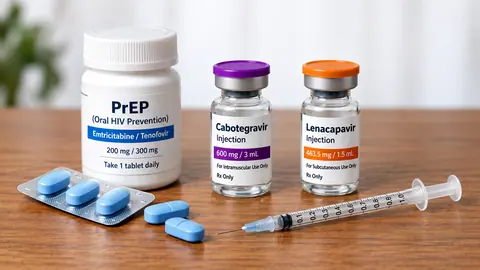
A poster from Washington University in St. Louis researchers at IDWeek 2026 in Washington, DC (October 21–24), reported by AJMC on October 22, 2026, showed how often demand for long-acting injectable HIV PrEP (LAI PrEP) fails to turn into actual injections. At a large Ryan White-funded clinic in St. Louis, 268 of 726 PrEP patients were prescribed LAI PrEP between February 2022 and July 2026, and 105 of them (39.2%) never received it. In the poster's detailed cohort of 170 patients (prescribed through March 2026), 70 (41.2%) never got an injection. Of the 100 who did, 83% received cabotegravir (Apretude, ViiV) and 17% lenacapavir (Yeztugo, Gilead).
The barrier was insurance mechanics rather than patient hesitancy. Among the 70 who never started, 54.3% had no pharmacy benefit and 41.4% were denied prior authorization. Only 7.1% chose oral PrEP instead. 94% of recipients had a pharmacy-only benefit, while 57% of non-recipients had no benefit or an unknown benefit type. "Medical benefits rarely led to a successful injection in this clinic environment," lead author Dr. Aditi Ramakrishnan told AJMC, adding that even then, some insurers required prior authorization. Missouri has expanded Medicaid, but its Medicaid program does not cover LAI PrEP. Seven patients (4.1%) switched clinics just to get the injection billed under a medical benefit.
The outcome data show what the gap costs. 96% of recipients were still engaged in PrEP care at 12 months versus 72.9% of non-recipients (unadjusted OR 8.94). The team recorded one HIV seroconversion in a person with intermittent oral PrEP adherence who had been denied LAI coverage in the prior year. "Interest in LAI PrEP exceeds real-world access," the authors concluded, calling for simpler reimbursement models and expanded Medicaid coverage.
Sources
Story updates 1
Patients who do get the shot appear well protected. At IDWeek 2026 and at AMCP Nexus (San Diego, October 26–29), AJMC reported on October 28 two analyses from the PrEPFACTS claims cohort (Komodo Research Database). The first followed 2,913 long-acting cabotegravir (Apretude) users through September 2024, over a median 387 days. Only 5 showed evidence of HIV. Three were previously reported, and the two new cases had stopped injections 15 and 5 months before their first positive test. Infectious Disease Advisor reports no infections among people who stayed on schedule. The gaps were in testing. Billed HIV tests accompanied only 61.3% of injections (65.7% at initiation, 59.2% at continuation), below label and guideline recommendations, though unbilled tests aren't captured. The cohort was 16% women and 21% Black, above the general U.S. PrEP population (10% and 15%). Of the 2,913, 1,056 switched from oral PrEP, and 62% of those were still on cabotegravir.
The second poster compared adherence trajectories over the first year for new starters (Dec 2021–Oct 2023). Injectable users were more likely than oral-PrEP users to stay in the sustained-high adherence group: after weighting, 40% vs 26% (probability ratio 1.51). They were also less likely to fall into the rapid-decline group (34% vs 43%).
What changed: Last week's IDWeek study showed 4 in 10 prescribed patients never got their first injection, mostly because of insurance. This data covers the other side: people who do get the injection rarely acquire HIV and stay adherent longer than people on pills. Together they point to access, not efficacy, as the main barrier for long-acting PrEP, which has implications for payers, Ryan White programs and telehealth PrEP providers deciding whether to build injection logistics.