Jetson Set: Lovense Puts NVIDIA's Robotics Chip Inside a Stroker

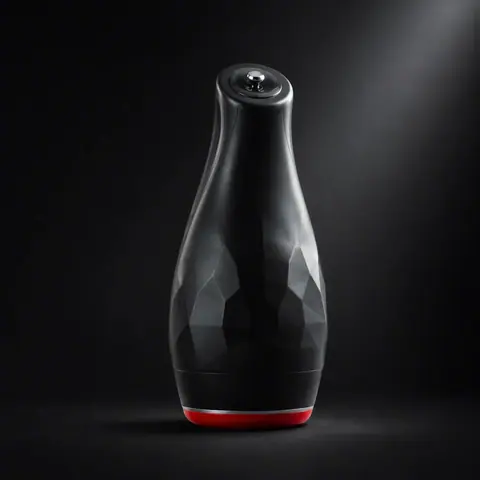
On September 23, 2026, TechBullion reported that Lovense is building Solace AI, a next-generation version of its automatic male stroker that runs an onboard AI model on NVIDIA's Jetson edge-computing platform — the same family of embedded modules typically found in robots and autonomous machines. Rather than executing a preset pattern, the device reads pressure and motion sensors while it operates and modifies speed, stroke depth and rhythm in response. A Lovense spokesperson framed the intent as moving "beyond a device that simply does what it's told," describing the goal as "something capable of recognizing patterns in how it's being used and adapting the experience in real time." Note the sourcing: this is single-source reporting with no Lovense press release, no pricing, no specifications and no ship date, and Afterglow could not find independent confirmation.
The architectural claim is more interesting than the marketing one. Every connected pleasure device to date has been, functionally, a motor taking instructions — from a button, an app, a partner, or a script synced to video. Solace AI inverts part of that relationship by processing sensor data locally instead of round-tripping it to a cloud service. Lovense's stated reasons are latency (the gap between a change in use and the device's adjustment) and privacy architecture, and the two happen to point the same direction: intimate biometric data that never leaves the device is data that cannot be breached at a server. The company says users will be able to disable adaptive learning, erase stored personalization profiles and fall back to conventional manual controls.
It layers onto a platform that already exists rather than replacing it. Solace AI follows the Solace and Solace Pro, both automatic thrusting strokers, and slots into the Lovense Remote ecosystem of Bluetooth control, remote partner control and AI Sync — the feature that translates interactive video and livestream content into device movement. The spokesperson's framing of the difference is genuinely the clearest articulation of the design thesis: "Synchronization gives the device context about what's happening digitally. Adaptive AI gives it context about the person using it." In practice that means two Solace AI units could respond differently to the same piece of interactive content, because each has learned a different profile of preferred speed, rhythm and stroke depth. Lovense characterizes this as optional personalization rather than autonomous operation, with manual override and remote partner control both retained.
Timing is not accidental. Lovense exhibits at eroFame in Amsterdam from September 30 to October 2, 2026 at Stand 145, where EAN reports it will show "the European trade debut of several new additions to the Lovense product family." The company also made its IFA Berlin debut on September 18 and has been showing a second-prototype Intimate Doll with claimed voice interaction and preference learning. A stroker with a Jetson module in it is a smaller, more shippable version of the same pitch: the hardware learns you.