Crank It Up: Netflix's Lizzie Borden Put Two Victorian Vibrators On Screen. Only One Was Real.
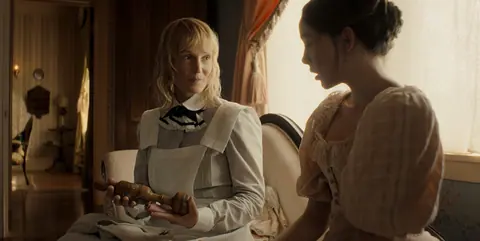
On September 20, 2026, Cosmopolitan's Brit Dawson published a fact-check of the two 19th-century sex devices that appear in Monster: The Lizzie Borden Story, which premiered on Netflix in mid-September — and the answer turns out to be a clean split: one is documented, the other is largely a myth the show borrowed wholesale from the internet. Mashable covered the same scenes on September 17–18 as part of its broader fact-versus-fiction breakdown of the Ryan Murphy series.
The Veedee is real. In episode 1, the Borden family's maid Bridget Sullivan introduces Lizzie to a hand-cranked wooden device — it looks like a pepper grinder — as a remedy for severe period pain. That device existed. Per the Science Museum Group, cited by Cosmopolitan, a 1903 Veedee instruction manual described the device as being for "curative vibration, vibratory massage, nerve stimulation, and blood circulating." The late-1800s therapeutic context was that massage was believed to treat almost anything: the Veedee was marketed for headaches, colds, digestive complaints and flatulence, and the same manual pitched it as a beauty tool for double chins, baldness and wrinkles. It was not sold as a sexual device. As Dawson puts it, its sexual utility — like the Hitachi Magic Wand's decades later — appears to have been a happy accident rather than a design goal.
The Chattanooga is mostly not. In episode 2, Bridget orders a steam-powered contraption for Lizzie — essentially a dildo on a crank-driven arm. Cosmopolitan couldn't verify it. A 1999 New York Times article suggests a "Chattanooga" did exist and cost $200 plus freight in 1904, and a 2022 blog post describes a two-meter, coal-fired appliance requiring two men to shovel for it — which Dawson flags as sounding too absurd to be true. More usefully, she identifies what the prop actually appears to be copied from: an unverified photo circulating online labeled "The Manipulator," attributed to Dr. George Taylor, a real American physician and inventor who did write the first book recommending massage for gynecological problems, in 1871. Her conclusion is that the show's device is part real 19th-century vibrator, part fiction about 19th-century vibrators.
The bigger correction underneath both. Dawson explicitly notes that many of the stories about early vibrators being invented or routinely used by doctors to treat female "hysteria" are likely myths. This matters because that narrative — physicians inducing "hysterical paroxysm" as standard medical practice, which the show stages as backstory — has been the single most repeated origin story in popular sex-toy history for two decades, propagated by the 2011 film Hysteria and a great deal of casual writing. Historians of medicine have been pushing back on it for years. Notably, the devices never actually get used on screen in Monster; they function as period texture and as a vehicle for the show's invented intimate relationship between Lizzie and Bridget, which has no historical evidence behind it.