Assistive Devices, Actually: A McMaster Researcher Makes the Case for Sex Toys as Accessibility Tech

On October 19, 2026, The Conversation published an analysis by Maha Khawaja, a PhD student in Health and Society at McMaster University, arguing that sex toys should be treated as adaptive tools for disabled and chronically ill people. McMaster News republished it on October 20. Khawaja starts from a familiar problem. After illness, disease or the onset of disability, conversations about sex tend to get stuck on "how far does the sex you're having now fall short of the sex you used to have?" Pain, fatigue, reduced mobility, changes in sensation or trouble holding positions make familiar sex harder. Some people keep trying to recreate what they had before, and others give up on sex altogether.
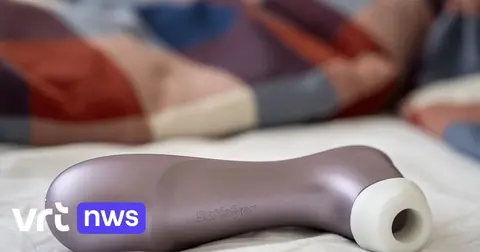
Her argument rests on sexual scripts, the cultural routines that treat penile-vaginal intercourse as "real sex" and everything else as warm-up. Adapting requires what she calls sexual flexibility, and toys can help get there. As accessibility tools, she writes, they "deliver controlled stimulation, reduce the physical effort sex requires and broaden what satisfying sex can involve." Her design examples are specific. Ergonomic handles help people with limited grip. Hands-free toys remove the need to hold a device in place, which matters when disability or fatigue makes repetitive movement tiring. Vibration can provide stimulation when sensation is reduced. Positioning aids such as wedges, swings, adaptive seating and ordinary pillows can support body weight for people with limited hip movement, paralysis or joint pain. She cites supportive-care oncology research showing that combining toys with adaptive practices improves satisfaction, desire and relationship quality. She also cites studies showing clitoral vibrators benefit women with multiple sclerosis or spinal cord injuries. For a baseline, she points to a nationally representative study of 1,170 Canadian women, in which 50.6% had used a vibrator.
She also lists where access breaks down: toys are often expensive, come in conspicuous packaging or are too loud, and some contain hormone-disrupting chemicals. Disabled people face the added assumption that they aren't interested in sex, along with limited privacy when living with family or receiving support at home. That makes buying, storing and using a toy a logistical problem as well as an emotional one. She points readers to resources such as OMGYes and to sex therapy.
Sources
- Sex toys aren't just for fun. They can be adaptive tools for disabled and chronically ill people — The Conversation (Maha Khawaja, Oct 19, 2026)theconversation.com
- Analysis: Sex toys aren't just for fun. They can be adaptive tools for disabled and chronically ill people — McMaster News (Oct 20, 2026)news.mcmaster.ca
Story updates 1
The argument moves from academia to the trade press, and to policy. On October 27, 2026, XBIZ published "Why Adaptive Pleasure Belongs Across Every Adult Retail Category" by Hail Groo, an adult-industry marketer who writes that they live with Ehlers-Danlos syndrome, endometriosis, autism and ADHD. Groo argues that retailers should stop putting accessible products in a hard-to-find "adaptive" category. Instead they should merchandise by use case, answering questions such as "What can I use if my wrists hurt?" or "What can I use without holding anything?" Product copy should give concrete details like weight, button placement, charging method and cleaning requirements, and filters should include tags such as lightweight, hands-free, easy-grip and low-noise. The piece cites the CDC figure that more than one in four U.S. adults reports a disability, and names Intimacy Rehab as an online retailer built specifically for disabled, chronically ill, neurodivergent and aging shoppers.
In Belgium, the policy question is human assistance. On October 28, The Brussels Times reported on sexual assistance for people with disabilities. The practice has no legal status of its own in Belgium, even though the country decriminalized sex work in 2022 and has allowed sex-work employment contracts since December 1, 2024. Flemish organization Aditi vzw works with 130 trained sexual assistants, most of them not professional sex workers, and treats the work as care. Trauma and sex therapist Minne Marlo describes care and sex work as "a gradient rather than a line" and warns that a disability-only status "would draw the circle too small." Ethicist Florence Caeymaex, a co-author of Belgium's 2017 bioethics committee opinion on the subject, has questioned whether a separate law is needed. The sex-work law is due for evaluation this December.
What changed: Last week's story was an academic case for treating toys as assistive technology. This week, retail practitioners are explaining how to sell them that way, and a European country is debating how the law should treat intimate support that devices can't provide. For brands, the practical step is the XBIZ one: publish ergonomic specifications. Buyers with access needs check weight, grip and controls before anything else.