Smart Sex Toys, Dumb Cover Story: A Shenzhen Vibrator Firm Was Shipping Chips to Russia
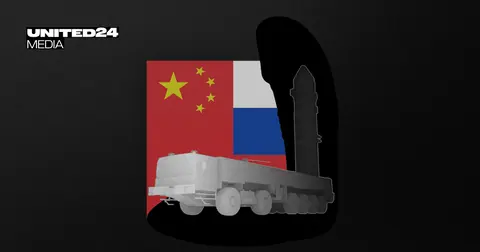
On September 18, 2026, UNITED24 Media published findings from NAKO — Ukraine's Independent Anti-Corruption Commission — showing that Shenzhen NuanQin Technology, a company advertising itself as a maker of "smart sex toys," shipped no sex toys to Russia at all. Customs records instead showed integrated circuits and over $100,000 worth of electric motors, alongside links to a drone retailer and a copier cartridge recycler. The disclosure sits inside a broader NAKO study of roughly 1,800 foreign suppliers involved in more than $800 million of trade in priority Western microelectronics reaching Russia.
The report's method is what makes the sextech cameo more than a punchline. NAKO analysed shared registration addresses rather than individual entities, and the results are stark: at a single Hong Kong office unit, investigators counted at least 45 companies, of which 14 were already sanctioned or export-controlled and 31 were not — collectively supplying Russia with more than $16 million in priority microelectronics. Firms registered at addresses tied to offshore structures accounted for a further $57 million, of which $26 million came from entities facing no restrictions at all. Across the study, more than 200 addresses associated with sanctioned or export-controlled entities were used by over 450 suppliers, accounting for nearly $380 million in trade.
The central case NAKO builds concerns Liu Baoxia, also known as Emily Liu, a Chinese national sanctioned by the United States in 2017 and added to the FBI's wanted list in 2025 along with accomplices. Since 2007, per NAKO, her network has allegedly smuggled US-origin electronic components to Iran in support of its ballistic-missile and UAV programs, relying on Hong Kong front companies set up by corporate secretaries working from the Ho King Commercial Center. NAKO identified at least 14 companies supplying microelectronics to Russia from those same offices, only five of which have been sanctioned. The commission is careful about what a shared address proves: it stresses that co-location does not establish a single coordinated network, but argues it signals a heightened diversion risk that entity-based screening routinely misses. The report opens with the frustration driving the whole exercise, quoting a question its authors say they hear constantly: "It takes years to sanction something that can be replicated in days — so what is the point of sanctions at all?"
Shenzhen NuanQin Technology is described in the report as advertising smart sex toys; Afterglow found no evidence it is a recognised brand in the consumer pleasure-products market, and nothing in NAKO's findings implicates any established connected-device company.
Sources
- Russia's "Smart Sex Toy" Supplier Was Actually Shipping Microelectronics and Electric Motors — UNITED24 Mediaunited24media.com
- Investigation reveals Chinese 'smart sex toy' company supplied microelectronics to Russia — Dagensdagens.com
- Follow the Address: Shared Offices, Shell Companies, and Russia's Microelectronics Supply Chains — NAKOnako.org.ua
Story updates 1
NAKO takes its case to Brussels. On September 25, 2026, NAKO researchers Viktoriia Vyshnivska and Marta-Maria Kharynovych published an opinion piece in EUobserver that put Shenzhen NuanQin Technology at the centre of a broader argument about EU sanctions policy. They write that NuanQin "advertised 'smart sex toys' but shipped to Russia no 'Leopard Print Beginner's Floggers' or 'OMG! Feather Ticklers,'" and that customs records show industrial electronics, integrated circuits and other dual-use components instead. They also add a detail not in the original report: NuanQin "is also linked to an FPV drone retailer."
The policy ask is to screen addresses, not company names. The authors say the EU has sanctioned about 3,000 individuals and entities over the war (the US more than 7,000), and that one network the UK sanctioned about six months after exposure took the EU almost two years. Their dataset links more than 200 addresses to restricted entities, used by over 450 suppliers accounting for nearly $380 million in trade. They restate the Hong Kong office-unit finding (45+ companies, only 14 restricted, $16M+ in priority microelectronics) and the Liu Baoxia/Ho King Commercial Center link. The Daily Star picked the story up on September 28 under the headline "Russia 'smuggling in tech disguised as sex toys,'" quoting Vyshnivska that such suppliers "may look like small retailers or freight forwarders — unremarkable enough to pass conventional sanctions screening."
What changed: the finding has moved from an investigative report into an explicit EU policy recommendation, and into tabloid headlines that tie the words "sex toys" to "sanctions evasion." For legitimate Shenzhen-sourced pleasure brands, address-based screening would mean compliance teams checking suppliers' registered premises, not just their names, against sanctions lists. Brands should expect more questions about where their contract manufacturers are actually located.