Look What You Made Her Trademark: Taylor Swift Files USPTO Filings to Block AI Deepfakes of Her Voice and Image
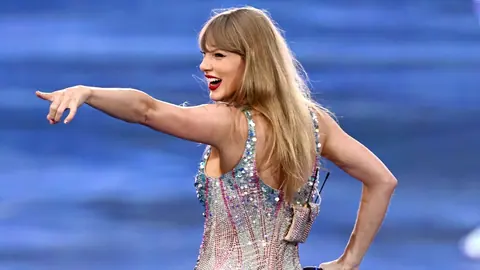
On April 28, 2026, Taylor Swift filed three trademark applications with the U.S. Patent and Trademark Office covering two audio clips of her voice and one image of her on stage with a guitar — a legal maneuver trademark attorneys called the most aggressive celebrity-driven test of using federal trademark law to combat AI-generated sexual deepfakes. The applications, filed under TAS Rights Management, cover Swift speaking the phrases "Hey, it's Taylor Swift" and "Hey, it's Taylor," plus the stage-performance image. Trademark registration of a spoken voice has not been previously tested in U.S. courts.
The filings come after years of Swift being one of the most-targeted subjects of nonconsensual sexual deepfake imagery — including the X-distributed deepfakes in January 2024 that prompted the federal TAKE IT DOWN Act (whose criminal provisions secured their first conviction April 8, 2026, against Ohio's James Strahler II). The AI-generated CSAM and NCII crisis has only intensified since: an NBC News review this month found dozens of new sexualized AI images of real women on X, including Grok-generated outputs, despite xAI's January pledge to halt sexual deepfake generation. Eight separate law enforcement and regulatory agencies — California AG, Australia's eSafety, Privacy Commissioner of Canada, European Commission, Ireland DPC, Paris prosecutors, Ofcom, and the ICO — are actively investigating Grok's sexualization capabilities.
Swift's trademark gambit pursues a strategy attempted earlier by Matthew McConaughey's legal team: layering federal trademark protection on top of state-by-state right-of-publicity laws to give celebrities a unified, high-leverage takedown tool against AI-generated likeness misuse. Trademark filings produce additional remedies the criminal TAKE IT DOWN Act and civil DEFIANCE Act do not — specifically, immediate platform takedown obligations under the DMCA-adjacent USPTO process and the ability to enforce against infringing AI training data. Several legal experts said the filings will succeed at the USPTO for the audio clips and may face higher scrutiny on the image, given trademark's traditional commerce-identification standard.
Sources
- CBS News — Taylor Swift files to trademark her voice and image amid rise in AI deepfakescbsnews.com
- NBC News — Taylor Swift files to trademark her voice and likenessnbcnews.com
- Variety — Taylor Swift Files to Trademark Her Voice and Likenessvariety.com
- PetaPixel — Taylor Swift Files Trademarks to Protect Image From AI Deepfakespetapixel.com