Smoke Signals: WHO Says Smoking Raises Infertility Risk 40% — and Wrecks Erections Too
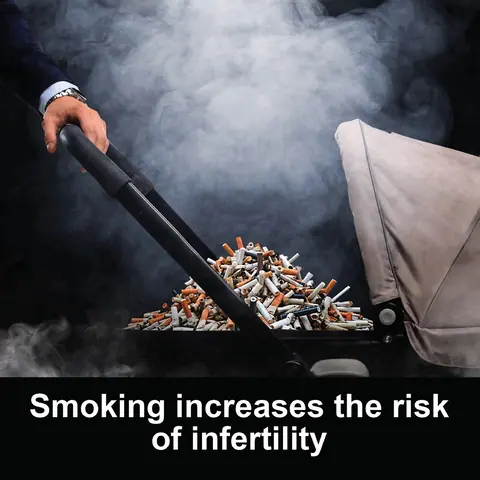
On September 8, 2026, the World Health Organization published a knowledge summary linking tobacco use to infertility in women, reproductive and sexual dysfunction in men, and reduced success rates for assisted reproduction — and warned that second-hand smoke carries reproductive risk too, meaning you don't have to smoke yourself to be exposed.
The headline numbers are specific. A systematic review of studies conducted between 2000 and 2026 found women who currently smoke have a 40% higher risk of infertility than non-smokers. Women who smoked in the past but have quit may have a 25% lower risk of infertility than those who continue — evidence, WHO notes, that quitting makes a meaningful difference. Globally, one in six people of reproductive age will experience infertility at some point, defined as failure to conceive after 12 or more months of regular unprotected sex.
The male-health findings are the part the sexual wellness sector should read twice. WHO cites a recent review of 44 studies covering more than 60,000 men that associated smoking with reproductive dysfunction including semen abnormalities and sexual dysfunction — men who smoke were more likely to have erectile dysfunction and ejaculation problems, alongside azoospermia, poor sperm motility and abnormal sperm morphology. The organisation is explicit that infertility is not only a women's health issue.
For patients in treatment, the effect is blunt: WHO cites earlier research across 21 studies showing cigarette smoking was linked to fewer live births and fewer pregnancies following assisted reproduction, with findings suggesting the chances of successful outcomes may be roughly halved. Evidence on e-cigarettes, waterpipes and smokeless tobacco is still emerging; WHO says the evidence is strongest for cigarettes but warns other nicotine products may also pose risks and require further research.
The recommendation is operational rather than rhetorical: health-care providers should inform individuals and couples planning pregnancy about the reproductive risks of tobacco, offer evidence-based cessation support, and consistently deliver brief quit advice to all tobacco users in all health-care settings. "For all people who plan pregnancies, our message is, 'Stop smoking, improve your health, improve your reproductive health as well,'" Dr. Kerstin Schotte of WHO's Tobacco Free Initiative told UN News.