Muscle Memory: FDA Stacks Its Peptide Panel With Sellers as MAHA Pushes to Loosen the Rules
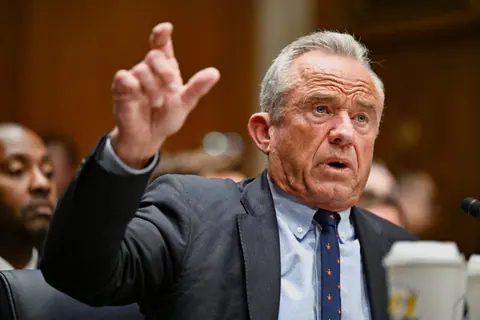
On June 29, 2026, the FDA released the participant list for a two-day July advisory meeting that will reconsider the safety and effectiveness of several popular peptide injections — and, as first reported by the Associated Press (via PBS NewsHour) and Reuters, the new panel is dominated by doctors, pharmacists and clinic operators with deep financial ties to the very peptides under review. Previous FDA compounding panels on the topic were composed largely of academics from Duke, Harvard and Johns Hopkins, and they had repeatedly voted the ingredients too risky for patients. The reconstituted group instead includes more than a half-dozen members who prescribe, produce or promote peptides — a striking reversal that critics say is engineered to reach the opposite conclusion.
The substances at issue — including BPC-157 and TB-500, two of seven peptides set for the July review — are marketed online and through wellness clinics for muscle-building, injury healing and anti-aging, with little human evidence behind the claims. Both are classified as doping agents by international sports authorities, and the FDA has spent years warning consumers about injecting them. Sellers frequently skirt regulation by labeling products "for research use only." The push to loosen access is a signature project of the Make America Healthy Again movement aligned with Health Secretary Robert F. Kennedy Jr.; ahead of the meeting, FDA's own scientists publicly warned against expanded access, setting up a rare open split between career reviewers and politically appointed panelists.
The conflicts are not subtle. Per AP's reporting, panelist Dr. Haleem Mohammed runs Florida clinics (part of the Gameday Men's Health chain) selling peptide, vitamin, testosterone and weight-loss injections, with a website conceding its compounded medications "are not FDA-approved." Another member, Dr. Gabriel Alizaidy, charges $500 for "peptide and hormone" consultations and promotes BPC-157 and GHK-Cu to social-media followers. A third, Tennessee state senator and pharmacist Bobby Harshbarger, works at his family's compounding pharmacy; his mother, Rep. Diana Harshbarger, previously urged Kennedy to relax FDA peptide restrictions.
Why this sits on the sexual-health beat: peptides are increasingly cross-sold through the same men's-wellness and TRT telehealth channels that anchor the male sexual-health segment — the Gameday-style clinics bundling testosterone, weight-loss drugs and "longevity" peptides in one visit. And the marquee sexual-medicine peptide, PT-141 (bremelanotide) for low libido, sits squarely in the compounding crosshairs this regime is reshaping. A regulatory green light for looser peptide access would hand men's-health platforms a fast-growing new product line; a crackdown would squeeze it.
Sources
- FDA panel on peptides will include experts who promote the unproven chemicals favored by RFK Jr. (AP via PBS NewsHour)pbs.org
- FDA to weigh easing limits on unproven peptides favored by RFK Jr. and MAHA supporters (AP via PBS NewsHour)pbs.org
- HIMS Stock Slips After FDA Staff Questions Safety Of Popular Peptides (Stocktwits)stocktwits.com
Story updates 5
Newest first.
The first state says no, and the AMA asks HHS to reverse course. HHS's October 28 enforcement-discretion policy did not stop federal action against 503A compounders using six peptides (BPC-157, TB-500, Epitalon, Semax, KPV, MOTS-c). This week it ran into resistance on two fronts.
- Kentucky. On November 18, 2026 the Kentucky Board of Pharmacy voted to enforce its existing compounding rule (201 KAR 2:076) and grant no waivers. A November 19 compliance alert says the federal policy "does not authorize" compounding any of the six in or into Kentucky, including by nonresident (mail-order) pharmacies, with no grace period. None of the six has a USP/NF monograph, is a component of an FDA-approved drug, or is on FDA's 503A bulks list, which Kentucky requires. Pharmacies must stop compounding and shipping, segregate inventory, and notify prescribers and patients (National Law Review; Investing.com).
- The AMA. In a November 11 letter to HHS, publicized November 18, the American Medical Association urged the administration to rescind the "rushed" policy and send the substances through full FDA review. "We should not bypass the science and put patients at risk by making them guinea pigs for unapproved drugs," said AMA President Dr. Willie Underwood III. AMA delegates also adopted a policy at the Interim Meeting calling for the rollback.
Markets noticed. BofA cut its Hims & Hers price target to $21 from $26 (Neutral), citing the Kentucky ban. Investing.com put HIMS at about $16, down nearly 19% in a week. That comes days after Hims launched Peptides+ and said it plans to add BPC-157 and TB-500 when regulators allow.
What changed: The peptide opening was always federal tolerance, not approval. Kentucky shows that a single state board can shut a state off from it, including for out-of-state telehealth pharmacies, and that federal discretion doesn't override state ingredient rules. For men's-health and sexual-wellness platforms building peptide menus (Hims, Noom's OpenRx with its PT-141 + tadalafil tablet, Hone, Phases), expect state-by-state availability like the patchwork that already exists for compounded GLP-1s. Organized medicine is now formally opposed.
New sources
- Not So Fast: Kentucky Holds the Line on Peptide Compounding — The National Law Review (Nov 22, 2026)natlawreview.com
- BofA cuts Hims and Hers stock price target on Kentucky peptide ban — Investing.com (Nov 20, 2026)in.investing.com
- AMA opposes HHS proposal to expand access to unapproved peptides — American Medical Association (Nov 18, 2026)ama-assn.org
A women's peptide platform launches with libido products. On November 3, 2026, WWD reported the launch of Phases, a Los Angeles telehealth platform for women founded by Lana Elie-Meyers (CEO, previously founder of floral marketplace Floom) and Joseph Elie-Meyers (COO, a former civil-rights litigator). It offers nine peptide-based treatments starting at $145 a month across metabolism, energy, recovery and sexual wellness, including PT-141 (bremelanotide) and oxytocin, alongside tirzepatide (from $275 a month), sermorelin, NAD+, glutathione and MIC/B12. Some are injected and some are nasal sprays. Prescriptions follow an online intake and physician review and are filled by partner 503(a) compounding pharmacies. Joseph Elie-Meyers told WWD the FDA has moved "from the approach of just barring a lot of these peptides… to focusing on channeling them through safe prescription channels."
Context: PT-141 is the active ingredient in Vyleesi, FDA-approved only for HSDD in premenopausal women. It is not one of the six peptides in HHS's October 28 enforcement-discretion policy (BPC-157, TB-500, epitalon, KPV, MOTS-c, Semax). Phases is offering it as a compounded version of an approved drug. Men's Health notes that the six-peptide policy is temporary and none of those peptides is FDA-approved.
What changed: Hims' Peptides+ went after the men's market first. Phases is the first launch we've seen aimed at women, with libido among its headline products. Expect more DTC platforms to sell compounded PT-141 for midlife desire. That puts them in the same claims-substantiation risk we flagged for testosterone-for-women (see Off-Label, On the Record): an approved molecule sold outside its approved population, through compounders, with marketing about life stages rather than diagnosis.
New sources
Hims names its product, and a coroner names a risk. A day after HHS's enforcement-discretion policy took effect, Hims & Hers CEO Andrew Dudum previewed Peptides+, a new specialty "built around a clinically guided protocol" (Oct 29 company post). At launch Hims plans to offer sermorelin, glutathione, B12, NAD+ and L-carnitine, with BPC-157 and TB-500 "to follow when allowable." Dudum called the HHS move "a draft interim policy" and "meaningful progress toward a regulated, safer pathway," and pointed to Hims' own U.S. peptide manufacturing facility. That is the captive-capacity advantage we flagged yesterday, given that the policy is limited to 503A pharmacies.
On the same day, Victoria (Australia) coroner David Ryan found that actor and stuntman Richard Norton, 75, died of cardiac arrest in March 2025 after injecting the prescribed but unapproved peptides CJC-1295 and ipamorelin. Norton had told a nurse he was taking double the prescribed dose. The coroner recommended that the TGA review the peptides and consider moving them to Schedule 10, which would restrict them to clinical trials. "I am not satisfied that it is appropriate for them to be available to be prescribed by medical practitioners," he wrote (AAP via The Guardian). Neither peptide is on HHS's U.S. list of six. Separately, the Partnership for Safe Medicines said it filed a citizen petition on October 16 asking FDA not to allow compounding of the PCAC-recommended peptides. PSM says it bought five vials of unapproved peptides from telehealth services in the past 45 days, including BPC-157 before it was eligible.
What changed: The commercial opening now has a named product from the biggest DTC men's-health platform. Opponents also have an inquest finding to cite. Expect the Norton case to come up in U.S. comments on the formal rulemaking, and expect Australian telehealth peptide prescribing (AHPRA has already warned) to tighten first.
New sources
- Expanding Safe Access to Peptides — Hims & Hers Newsroom (Andrew Dudum, Oct 29, 2026)news.hims.com
- Coroner calls for TGA to review unapproved peptides after death of Australian actor — The Guardian / AAP (Oct 29, 2026)theguardian.com
- PSM files citizen petition asking FDA not to allow compounding of peptides — Partnership for Safe Medicines (Oct 26, 2026)safemedicines.org
It's official: six peptides can now be compounded under "enforcement discretion." On October 28, 2026, HHS released the interim policy that was under White House review in mid-October. The department said it will not take enforcement action against state-licensed pharmacies, federal facilities or licensed physicians compounding six peptides backed by July's advisory committee: BPC-157, epitalon, KPV, MOTS-c, semax and TB-500 (NBC News; NPR; STAT). None is FDA-approved. NBC reports that compounders must certify the identity and purity of the ingredients and must now report side effects, which wasn't previously required. The peptides' legal status hasn't changed. The FDA is still working on a formal rule, and the policy is not a listing.
Supply will be tight, at least at first. NPR reports that the policy applies to smaller 503A compounding pharmacies, not high-volume 503B outsourcing facilities. Joshua Fritzler of Florida's Olympia Pharmaceuticals told NPR, "We won't be able to meet demand," and said his company will likely compound only one of the six. The Alliance for Pharmacy Compounding welcomed the move as a "more accountable alternative" to "research-use-only" gray-market vials. Public Citizen's Dr. Robert Steinbrook said Kennedy had "undermined the FDA." Former FDA official Dr. Peter Lurie of CSPI said the agency was "turning a blind eye."
Market reaction. Investor's Business Daily reports Hims & Hers stock "popped" on October 28 after the notice. Hims has said it started API validation work for peptides at its Menlo Park facility.
What changed: In July this was an advisory vote, and in mid-October it was a policy document at OMB. It is now in effect. Note what's missing: PT-141 (bremelanotide) and other sexual-health peptides aren't among the six, so the immediate commercial opening is in recovery and longevity products, not libido. For men's-health telehealth, the main constraint is capacity. Limiting the policy to 503A pharmacies caps volume, which favors platforms with their own or captive compounding capacity. The enforcement-discretion structure also means a future HHS could reverse the policy without notice-and-comment.
New sources
- RFK Jr. takes shortcut to make some unapproved peptides available for use — NBC News (Oct 28, 2026)nbcnews.com
- Trump administration will allow pharmacies to make popular peptides — NPR (Oct 28, 2026)npr.org
- HHS moves to allow compounding of some unapproved peptides — STAT (Oct 28, 2026)statnews.com
- Hims Stock Surges After RFK Jr. Eases Access To Unapproved Peptides — Investor's Business Daily (Oct 28, 2026)investors.com
The peptide opening moves to the White House, and Hims stock jumps. On October 15, 2026, an Office of Management and Budget posting showed that HHS and the FDA had submitted an "Interim Access Policy for Compounding Using Certain Peptides" for White House review. OMB received it on October 14, according to Stocktwits. The AP, citing two people familiar with the plan, reports that it would let specialty pharmacies temporarily compound some of the most popular peptides, including BPC-157, under enforcement discretion: an assurance that the FDA won't take action against them, not a formal change to the compounding list. A permanent listing would still need rulemaking, which could take years. The filing itself gives no details or timetable.
This follows the panel this story covered in July. The AP notes that the external advisers recommended dropping restrictions on six of seven peptides, against the conclusion of FDA staff scientists that none had been studied enough to establish safety and effectiveness. The FDA had previously put BPC-157 and more than a dozen other injectable peptides on its too-risky-to-compound list, citing contamination, allergic reactions and possible tumor growth. Wellness clinic operator Brigham Buhler, who sells peptides, called the move "huge" and "MEDICAL FREEDOM" on X.
Market reaction. Hims & Hers (HIMS) closed up about 6% on October 15, ending a three-day losing streak (Seeking Alpha; Stocktwits). Stocktwits cites a Leerink Partners estimate that the seven peptides reviewed in July could support a $2.2B annual telehealth market, with Hims capturing about 20%. CEO Andrew Dudum has said the company has "started validation and stability testing on APIs for those peptides" at its Menlo Park facility. On the same day Hims published a newsroom post by Brian K. Williams, MD, stressing that every prescriber on its platform belongs to an independent provider group and that Hims does not "incentivize providers for the number of prescriptions they write." That post comes while the company faces the FTC privacy-and-billing suit and a securities class action alleging, among other things, that it charged customers almost immediately after intake despite promising a consultation with a provider (see hims-securities-class-action-board-probe).
What changed: In July this was a stacked advisory panel. It is now a policy document at OMB. For men's-health telehealth, peptides are the next cash-pay category after compounded GLP-1s and compounded ED combinations. If the policy rests on enforcement discretion rather than a rule, though, any business built on it can be undone by the next administration, or by the next contamination event, without notice-and-comment.
New sources
- Trump administration advances plan for peptide drugs favored by RFK Jr. — Associated Press via WHIO (Oct 15, 2026)whio.com
- HIMS Stock Snaps 3-Day Slump On Peptide Hopes: Trump Administration Reviews Plan That Could Unlock $2.2B Market — Stocktwits (Oct 15, 2026)stocktwits.com
- Our Commitment to Independent, Clinician-Led Care — Hims & Hers Newsroom (Oct 15, 2026)news.hims.com